
Crane systems / Hoisting equipment
Electric Hoists
Hoisting units for crane systems, monorails and fixed maintenance lifting points.
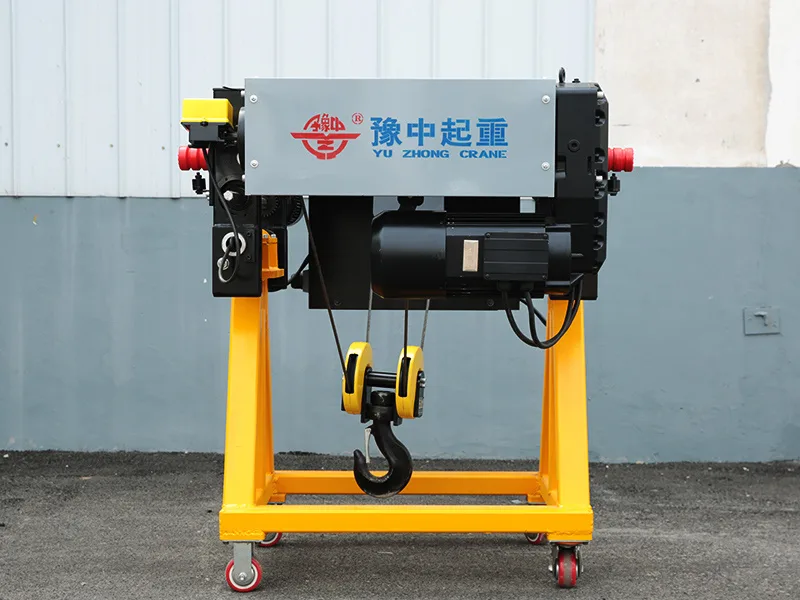
Application & engineering
Configuration follows the load, duty, available space and working environment.
Electric hoists support manufacturing, maintenance, assembly, workshops and selected hazardous or chemical operating areas.
- Fixed, monorail or crane-trolley arrangement
- Single or dual lifting speed
- Low-headroom layout
- Pendant or remote control
- Limit switches and overload protection according to scope
- Explosion-proof configuration only after area classification review
Configuration options
CD Wire Rope Electric Hoist
CD Wire Rope Electric Hoist
Single-speed wire-rope hoist for general industrial lifting.
MD Wire Rope Electric Hoist
MD Wire Rope Electric Hoist
Dual-speed lifting arrangement for applications requiring a slower positioning speed.
European Electric Hoist
Compact low-headroom hoisting unit for modern crane systems.
Low-Headroom Electric Hoist
Low-Headroom Electric Hoist
Arrangement selected to improve available hook height within a restricted building envelope.
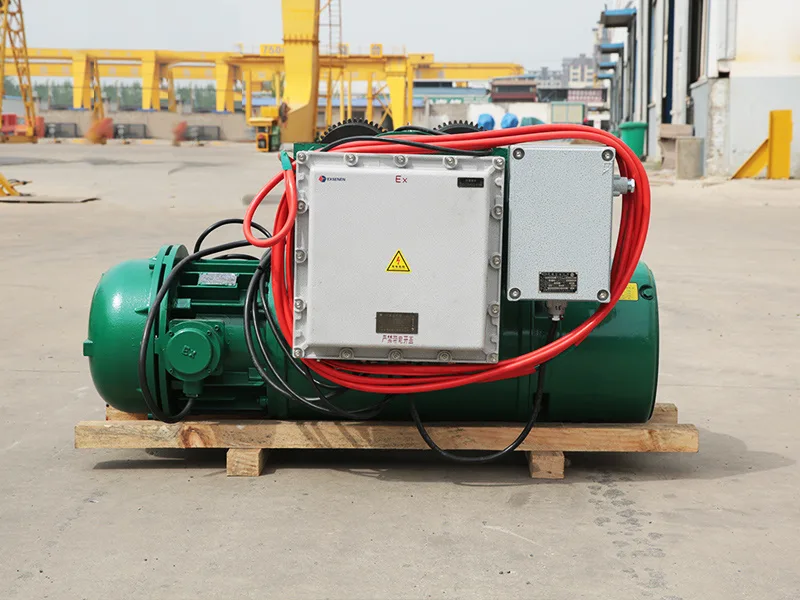
Explosion-Proof Electric Hoist
Protected hoist configuration based on the confirmed hazardous-area requirements.
Technical selection data
Final dimensions and ratings depend on the agreed technical scope. These are specification inputs, not a universal rating table.
- Capacity
- Project-specific; define maximum lifted load and lifting attachments.
- Span
- Clear distance and runway arrangement must be confirmed.
- Lifting Height
- Required hook travel and available building clearance.
- Duty Class
- Based on load spectrum, starts per hour and operating time.
- Travel Length
- Runway or yard travel distance.
- Power Supply
- Site voltage, frequency and phase.
- Control Method
- Pendant, remote or cabin control as required.
- Working Environment
- Indoor, outdoor, temperature, dust, moisture and chemical exposure.
Equipment evidence
Project questions
What is the difference between CD and MD hoists?
CD hoists are generally single speed; MD hoists add a slower lifting speed for positioning. Final selection depends on the duty and control requirements.
How do I specify lifting height?
State the required vertical hook travel and provide the available structural clearance and suspension level.
Can an electric hoist be used in a hazardous area?
Only a suitably configured hoist should be considered, based on the confirmed gas or dust classification and applicable project requirements.
Can the hoist use radio remote control?
Remote control may be included depending on the operating method and agreed technical scope.
Discuss your lifting requirements.
Share the load, operating environment and available drawings for technical review.
Project consultationsales@yuzhongcrane.com