
Primary industry expertise
Chemical & petrochemical
crane engineering.
Lifting systems configured around the actual plant area, process requirements and maintenance access.
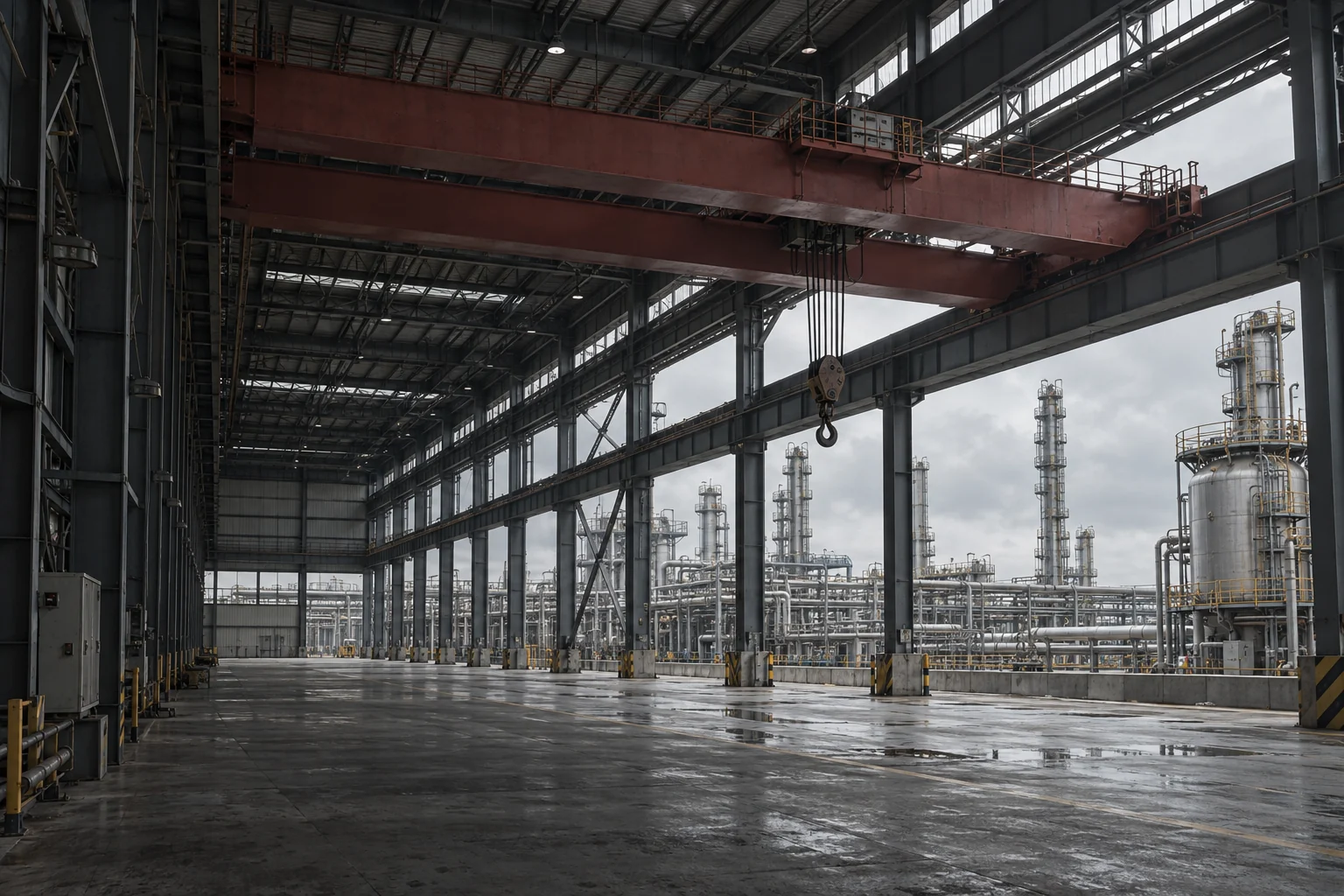
AI brand visual · Not a Yuzhong facility or project
Operating challenges.
Engineering response.
Not every area has the same classification. The responsible project party must provide or confirm the actual conditions.
Hazardous areas
Project-defined gas or dust classification and temperature requirements inform the protection concept. Explosion-proof configurations are evaluated where required.
Corrosion exposure
Identify chemicals, concentration, vapour, washdown and exposure duration before specifying coatings and protected components.
Operating duty & reliability
Define the load spectrum, lifting frequency and operating hours, including continuous-operation requirements where applicable.
Maintenance accessibility
Review hook approach, equipment removal routes, clearances and access around the process equipment.
Site conditions & safety
Review temperature, moisture, dust, outdoor exposure, operator visibility and the agreed control and protection requirements.
Chemical project records
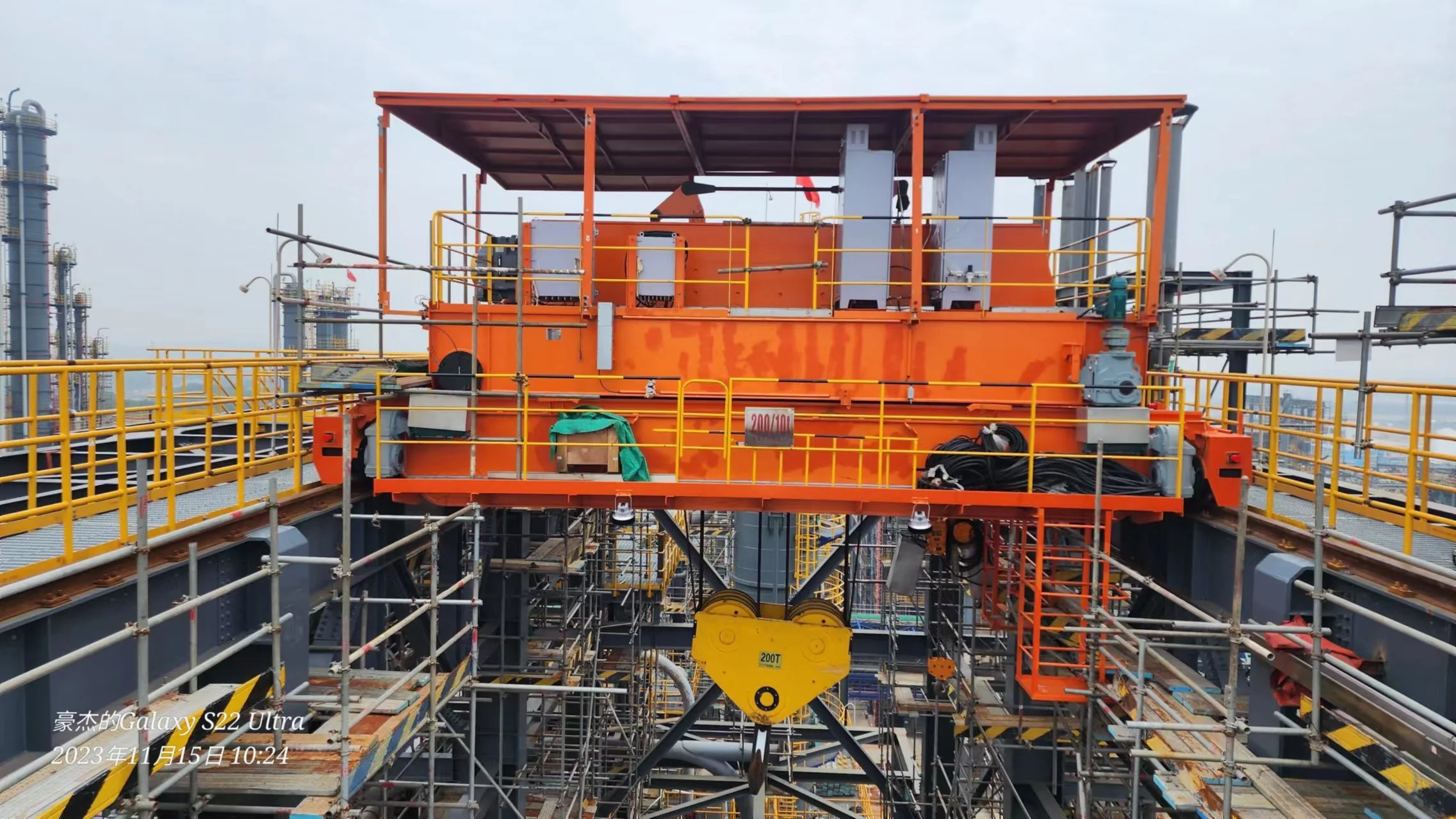
Silicone chemical facility
- Application
- Silicone chemical facility
- Capacity
- 200 t
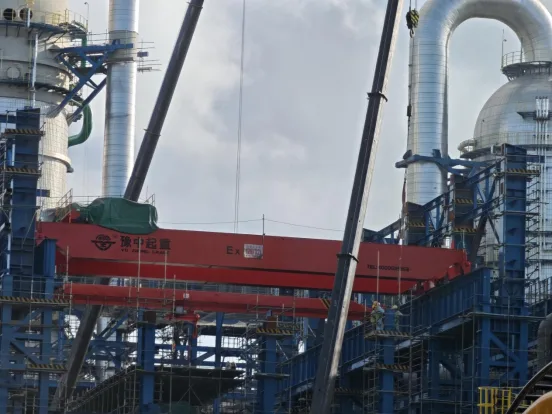
Gulei ethylene project
- Application
- Gulei ethylene project
- Crane
- QB explosion-proof overhead crane
- Capacity
- 120 t
Crane systems for the application
Overhead cranes
Process equipment handling and maintenance lifting.
Electric hoists
Maintenance bays, monorails and compact lifting points.
Gantry cranes
Outdoor equipment and storage-area handling where appropriate.
Chemical & special systems
Protection and configuration reviewed against the project requirements.
Project definition
- Capacity & Load
- Maximum equipment weight, lifting points and handling attachment.
- Span & Coverage
- Runway span, travel route and required hook coverage.
- Lifting Height
- Equipment removal path and available building clearance.
- Duty Class
- Maintenance frequency, process use and load spectrum.
- Hazardous Area
- Project-defined gas or dust classification and temperature requirements.
- Corrosion Conditions
- Chemicals, concentration, vapour, washdown and exposure duration.
- Surface Treatment
- Coating and protected materials selected for the exposure.
- Electrical Protection
- Enclosures, controls and components according to the agreed classification.
- Control Method
- Pendant, remote or cabin control based on visibility and risk.
- Documentation
- Drawings, inspection records and project documentation scope.
Project questions
What information is required for a chemical plant crane?
Provide load, span, lifting height, duty, hazardous-area classification, corrosion conditions, control method, maintenance access and project standards.
How is hazardous-area classification used in crane design?
It informs the protection concept and component selection. The responsible project party must provide or confirm the actual classification.
Can a crane be configured for corrosive conditions?
Yes. A coating system and protected components may be selected according to actual chemical exposure.
What control methods are available?
Pendant, radio remote and cabin control may be evaluated according to visibility, process and hazardous-area requirements.
Can technical drawings and inspection documents be provided?
Yes, according to the confirmed documentation and inspection scope.
How should maintenance access be considered?
Confirm removal routes, hook approach, clearances, platforms and access around the process equipment.
Discuss a chemical plant crane project.
Share the load, operating environment and available drawings for technical review.
Project consultationsales@yuzhongcrane.com